
Learning
to Trust
Bristol, 2019 · Ghost, a failed adoption, and the hardest day in rescue
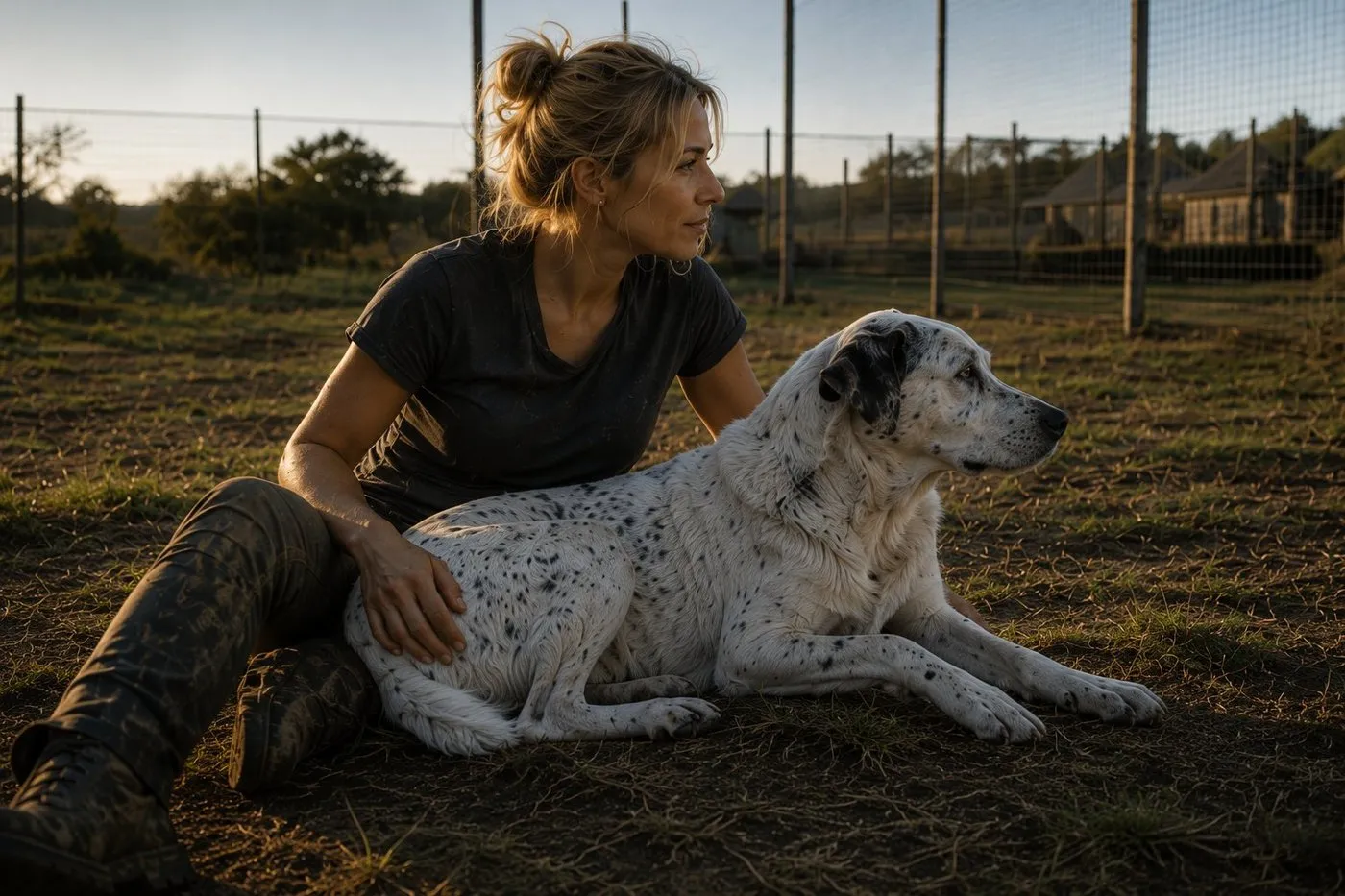
By the end of my third week with Ghost, he has been allowing me to sit within arm’s reach. Not touching — just proximity. I have been coming to his kennel twice a day, always at the same times. Routine is the first language of rehabilitation.
The volunteers have been watching with hope and caution. A foster family had expressed interest in Ghost. They had two children. I said nothing, but I made a note. Ghost has been showing progress, but a noisy family environment would undo months of work in one afternoon.
We talked to the family. They were kind and completely wrong for Ghost at this stage of his recovery. They took a different dog — a Labrador surrendered when his owner moved abroad. He left with a wagging tail. That is the good ending. We don’t always get those.
Two weeks later, a quiet couple adopted Ghost. They had been visiting the centre for a month. They understood what they were taking on. Six weeks later, they sent a photograph. Ghost was lying on a sofa, eyes soft. That is what we work for.
But there is the other kind of day. A dog named Bea came back to us on a Thursday. The family had been struggling and hadn’t told us. The microchip records showed no contact attempt. When Bea arrived, she walked to her old kennel, lay down, and didn’t move. Animals remember everything. Everything.
The question of euthanasia comes up in every rescue centre. Some animals are too damaged to rehome safely. I have been learning to hold that decision with respect rather than guilt. It is an act of care, not failure. The failure was whatever happened before they arrived here.
Tap a card to reveal its meaning — 0 / 12 revealed
Reveal all 12 words to unlock the next section ↓
✍️ Writing Task 1
Write 3 sentences about things you have been doing recently, using present perfect continuous.
Use: have/has been + verb-ing. Emphasises duration and ongoing activity.
✍️ Writing Task 2
Bea came back to the rescue centre after four months. Think of a time when something or someone returned to a situation they had left. Write 4–6 sentences.
Use past simple and past perfect to describe the timeline.
have/has been + verb-ing
Emphasises duration and ongoing activity from past to present.
Often with: for, since, all day, lately, recently
| Use | Structure | Example from the story |
|---|---|---|
| Ongoing action | has been + -ing | «Ghost has been allowing me to sit closer.» |
| Repeated over time | have been + -ing | «I have been coming to his kennel twice a day.» |
| Process not yet complete | have been + -ing | «I have been learning to hold that decision with respect.» |
| Past perfect continuous | had been + -ing | «The family had been struggling for months.» |
| vs Present Perfect (result) | have + p.p. | «She has shown progress.» vs «She has been showing progress.» (ongoing) |
| Stative verbs — no continuous | NOT: know, like, be, have | «I have known her for years.» NOT «I have been knowing her.» |